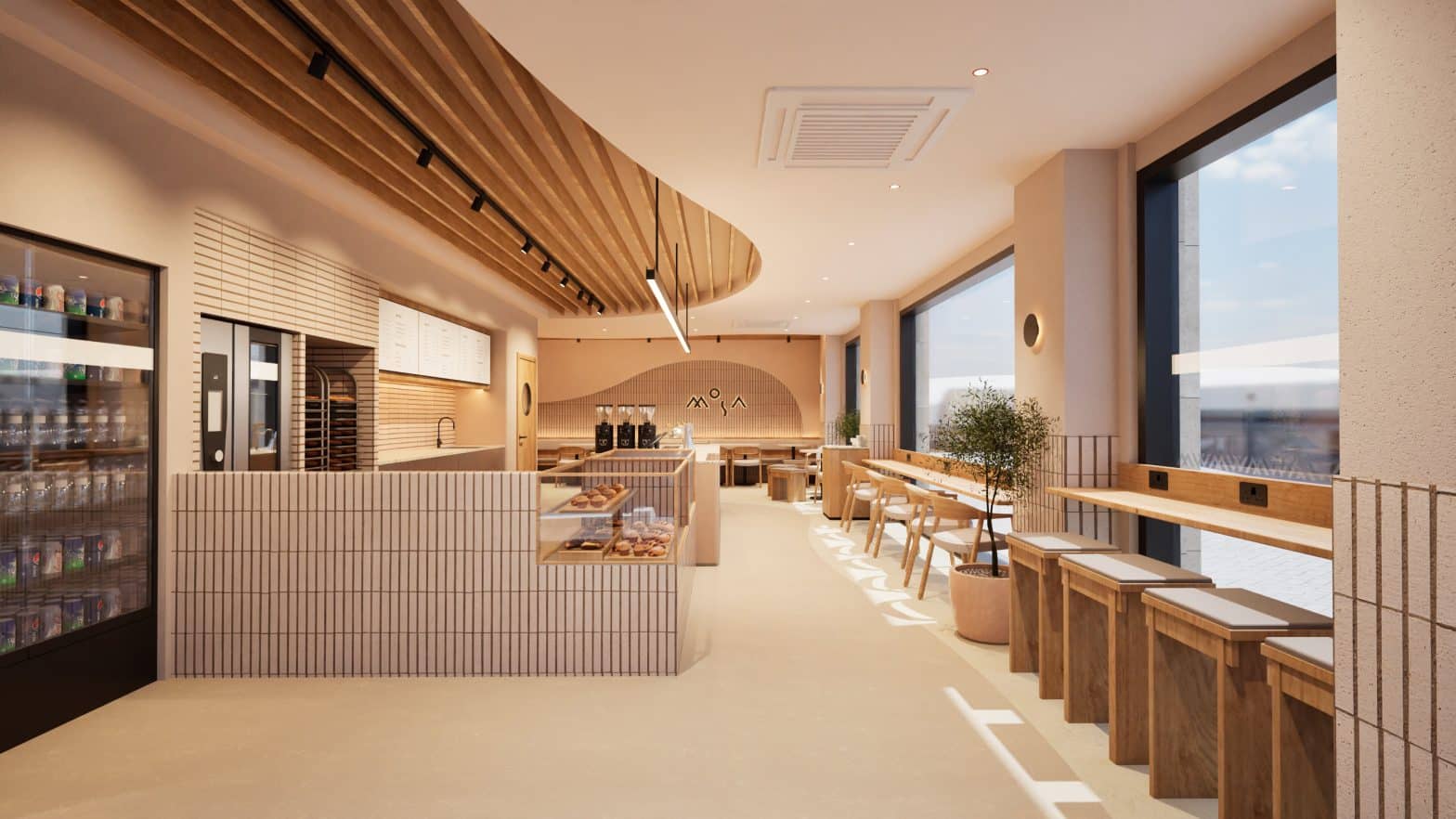
Inside the UK QSR Boom- How Design Is the New Competitive Edge
The UK’s Quick Service Restaurant (QSR) sector is not just growing. It is transforming the way brands think about dining, identity and space. With a market value of approximately £23.1 billion as of April 2025, and branded QSRs now representing more than a third of the foodservice market, this is an industry defined by pace, innovation and design-led thinking.
At Copper & Ash, we are seeing this shift first-hand. QSR operators no longer want interiors that are simply functional. They want spaces that are recognisable, scalable and full of character. Spaces that work incredibly hard operationally while still delivering atmosphere, clarity and a sense of brand purpose.
A Fast-Growing Sector with Huge Potential
There were more than 48,000 takeaway and fast-food outlets in the UK in 2024, with numbers continuing to rise year on year. Industry forecasts point to a compound annual growth rate above 5 percent from 2025 to 2030, with the global market potentially surpassing USD 54 billion by 2033.
Brands like Costa Coffee, Greggs, Subway and McDonald’s still dominate by footprint, but independents and emerging concepts are carving out meaningful space. Burgers, chicken-led menus and plant-based offerings all continue to see strong performance, while demand for delivery, digital ordering and click-and-collect keeps accelerating.
Despite economic pressures, consumers are still choosing convenience. Younger diners in particular remain drawn to value and speed, with average order values rising consistently over the past several years.
Why Great Branding and Interior Design Matter More Than Ever
In a highly competitive category, design is increasingly what sets brands apart. Reports on the QSR industry note that brands who do not establish a clear identity and presence in this space now risk being left behind.
That identity is delivered not only through the logo and packaging but through the physical environment itself.
Consistency builds recognition
Every detail matters. Signage, typography, materials, furniture, uniforms and even how lighting is layered all contribute to a recognisable branded experience.
Interiors must be visually compelling
Social media has changed how QSRs think about their spaces. Sharable moments, bold details and identifiable styling help create environments that naturally generate conversation and imagery.
Our project Dear Coco, the world’s first indoor micro-format “truck in the wall” cafe, is one example of this shift. With only 2.8 square metres to work with, we created a concept that feels theatrical, memorable and instantly identifiable.
Operational intelligence is non-negotiable
Behind the scenes, design must work just as hard. QSR layouts need to support speed and efficiency for both dine-in and takeaway models. Equipment placement, circulation routes, delivery integration and ergonomic design are all essential to performance.
Across our QSR and hospitality work, this balance between creativity and operational clarity is a focus from day one.
Strong design also directly impacts revenue: efficient counters can increase throughput by 10–20%, clear signage reduces order friction, and recognisable interiors drive repeat visits.
Compact Formats, Big Ambitions
As rents rise and consumer behaviour evolves, compact and flexible formats are gaining momentum. Brands are increasingly exploring micro-unit models, kiosks, modular counters and store-in-store concepts.
These formats demand smart, scalable design. A strong flagship identity must translate seamlessly into smaller footprints. Dear Coco showcases how much impact and theatre can be delivered within a tiny footprint when the brand story and spatial concept are strong.
Designing a QSR Is One Thing. Scaling It Is Another.
Opening a single QSR site is very different from opening three, five or fifty. As brands grow, the challenge shifts from “great design” to:
Speed and efficiency of rollout
Consistency in quality and identity
Predictable build costs
Adapting the concept for different footprints and landlord shells
Protecting operational performance at scale
This is why many growing QSR brands now look for ongoing design partners rather than one-off suppliers.
At Copper & Ash, we partner with some of the UK’s fastest-growing QSR brands – from a national rollout of over 75 sites to a high-street concept opening multiple flagship stores. We act as an extension of their internal teams, helping streamline, standardise and scale each new location.
Our support includes:
Creating scalable design systems and brand toolkits like Wingers pictured above where we worked with them to develop the concept for their franchise roll out.
Developing rollout-ready packs and templates
Value-engineering fittings and finishes to protect margins
Maintaining brand consistency from flagship stores to compact units
Adapting each site to its unique constraints without losing identity
Coordinating with contractors, suppliers and planning teams
Supporting the brand beyond launch with continual refinement
For us, a project doesn’t end at handover, we stay invested in the long-term success of the brand.
Understanding the Cost of Entry
Starting a QSR requires significant investment. Independent operators may spend between £5,000 and £300,000 depending on location, menu and scale. A typical branded counter-service fit out usually sits between £100,000 and £350,000.
Key cost drivers include:
securing the right premises
commercial kitchen equipment
fit out and interior design
licences and compliance
digital ordering and POS systems
staff and working capital
Franchise entry costs can be higher but benefit from established brand recognition. Whether launching independently or through a franchise model, interior design remains central to creating a recognisable and scalable concept.
What QSR Design Looks Like in 2025
Across our recent and upcoming hospitality projects, we are seeing three consistent priorities shaping QSR interiors this year:
Experience
Customers expect something more than speed. Ambience, atmosphere, lighting and materiality all carry weight in a QSR setting.
Efficiency
Layouts must support rapid service, delivery fulfillment and digital ordering while still feeling coherent and welcoming.
Scalability
The best QSR spaces are designed with future rollouts in mind. They translate across footprints without losing their core identity.
Designing the Future of Quick Service
The QSR market is evolving in exciting ways. As operators focus more on identity, story and experience, thoughtful interior design is becoming one of the most valuable competitive tools available.
At Copper & Ash, we partner with brands to create QSR concepts that are bold, efficient and ready to scale. Whether shaping a flagship environment, designing a micro-format site or planning a multi-location rollout, our focus is always on clarity, operational intelligence and brand expression.