
How thoughtful interior design helps coffee shops attract customers, increase spend and build loyalty.
Opening a coffee shop in the UK today means entering one of the most dynamic yet most competitive hospitality markets.
The branded coffee shop market reached 12,313 outlets in early 2026, adding more than 420 new sites in a single year, while the independent coffee shop sector has grown to 13,211 outlets, generating around £5.1 billion in annual sales.
Coffee remains a strong growth category. According to Lumina Intelligence, the café and coffee shop sector is forecast to grow turnover by 4.1% in 2025, with its share of the eating-out market increasing from 6.6% in 2022 to 7.1% in 2025.
Growth is good news for operators. But it also means customers have more choice than ever before.
Standing out is no longer optional.
This is where thoughtful design can make a real difference. When done well, it helps clarify a brand, sharpen the customer experience and create a space people remember.
Why Coffee Shop Interior Design Matters More Than Ever
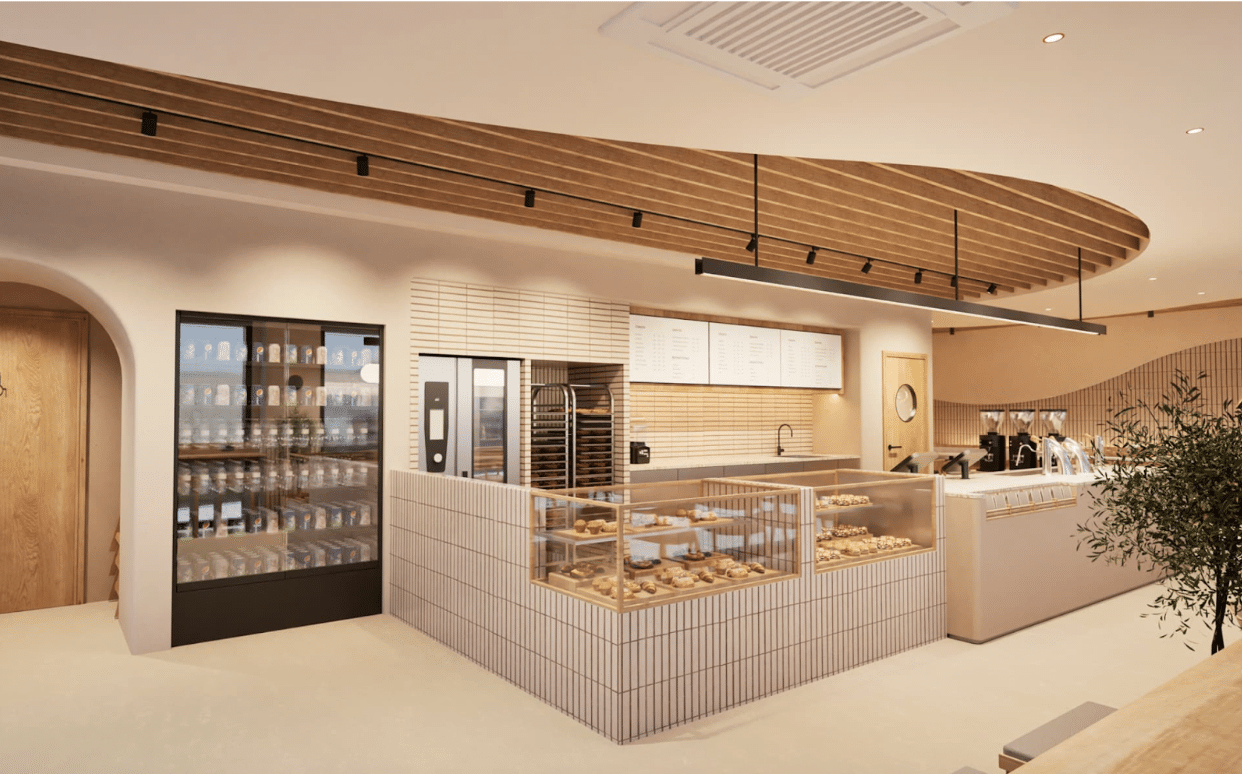
In a crowded market, coffee shop interior design has become one of the most powerful ways for operators to stand out. The physical space shapes how customers perceive the brand, how easily the team can serve and how comfortable people feel spending time there.
A well-designed coffee shop does more than look attractive. It supports efficient service, highlights products, encourages impulse purchases and creates an atmosphere customers remember. In a sector where many businesses offer similar drinks and menus, interior design often becomes the factor that turns a good café into a destination.
For independent operators in particular, thoughtful design can create a clear identity and help compete with larger branded chains. By carefully shaping the layout, materials, lighting, and seating, coffee shop owners can create spaces that feel distinctive while still working efficiently day to day.
If you are planning a new café or reviewing an existing one, thoughtful coffee shop interior design can be one of the most effective ways to strengthen your concept and improve the overall customer experience.
Where Coffee Shops Actually Compete
Most coffee shops compete across a similar set of factors:
• Location
• Customer service and loyalty
• Product quality and range
• Pricing
• Brand
• Interior environment
Some of these elements are difficult to change. Location is fixed. Pricing is often constrained by costs. Product innovation helps, but competitors can often replicate it quickly.
Interior design, however, is something operators can actively shape.
Research from Zonal, UKHospitality and CGA found that the biggest reasons customers return to a hospitality venue are:
• Quality of food – 53%
• Good service – 50%
• Good value for money – 48%
• Good atmosphere – 46%
A loyalty scheme, by comparison, was cited by just 16% of customers.
The atmosphere is not accidental. It comes from design decisions.
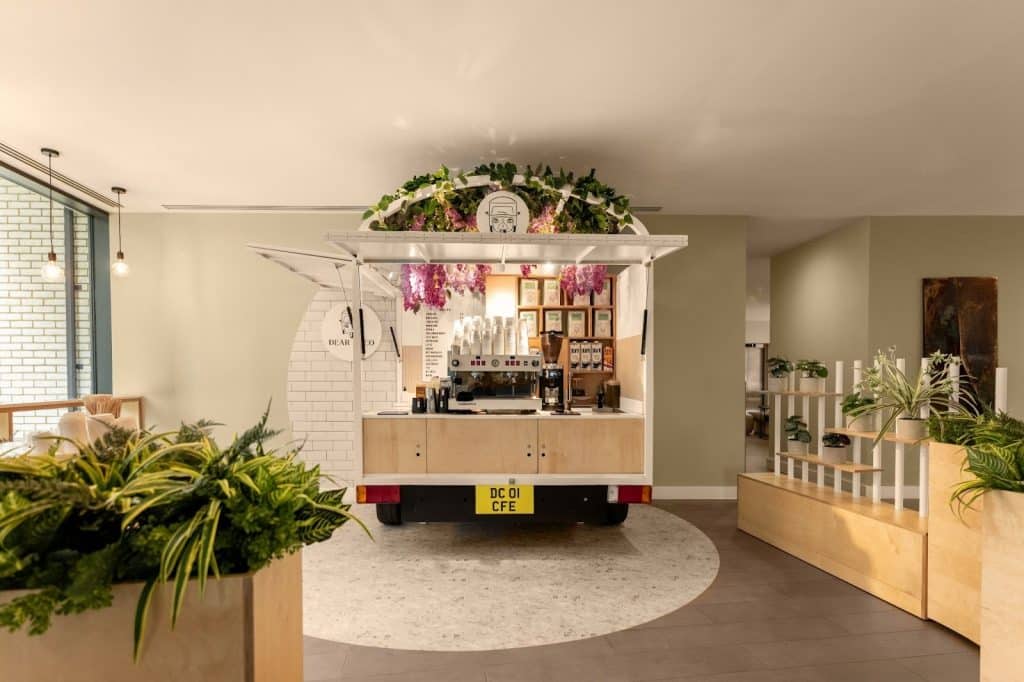
Interior design works best when it supports the product and service. It helps the coffee feel premium, helps the team serve efficiently and helps the brand feel intentional.
First Impressions Start Outside
The role of interior design begins before a customer even walks through the door.
From the street, your coffee shop should answer a simple question: why this place rather than the one two minutes away?
If the frontage, windows and lighting feel generic, you are relying almost entirely on footfall and habit. If they feel clear and distinctive, you are giving customers a reason to step inside.
That distinctiveness does not have to mean expensive or theatrical design. Often it simply means having a recognisable point of view.
WatchHouse offers a good example of this approach. The brand designs each location to respond to its building and neighbourhood while maintaining a consistent identity.
Spaces that feel rooted and authentic tend to resonate more strongly than those that feel copied and pasted.
Designing for Spend Per Visit
Once customers are inside, the next opportunity is increasing spend per visit.
Interior design influences this in several ways.
Layout and Customer Flow
Layout determines what customers see first and how easily they move through the space.
Questions worth considering include:
• Is the menu easy to read?
• Are pastries or retail products clearly visible?
• Is there a natural path from entry to ordering to collection?
• Does the queue interrupt seating areas?
These are design decisions as much as operational ones.
A clear layout reduces friction and supports impulse purchases.
Zoning for Different Customer Behaviours
Not every guest wants the same experience.
Some customers want a quick takeaway. Others want to stay for a meeting, brunch or remote working.
The most successful coffee shop interiors often create multiple seating moods within the same space.
This might include:
• quick perch seating near the entrance
• comfortable dwell seating deeper into the café
• communal tables
• smaller two-top tables
This flexibility allows one site to perform across multiple dayparts.
Where Good Layout Makes All the Difference
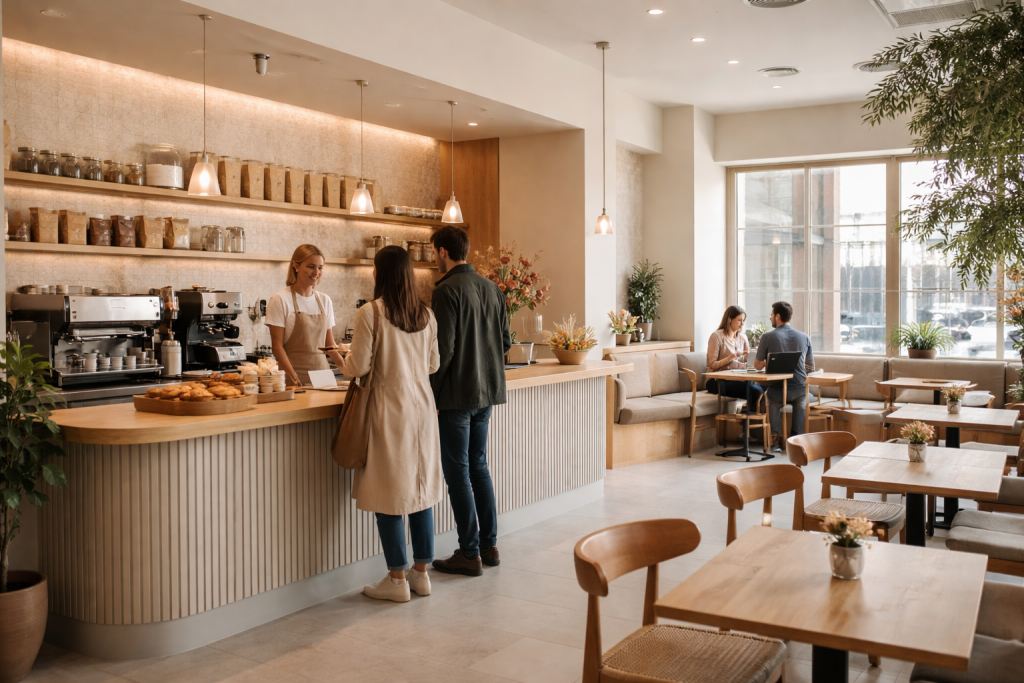
A clear customer journey is fundamental to a successful coffee shop. From entry through to ordering, waiting, collection and seating, the experience should feel intuitive and seamless. Zoning plays an important role here, particularly in balancing grab-and-go customers with those choosing to stay longer.
It is equally important to think about the staff journey. A well-planned layout supports efficient service, reduces unnecessary movement and helps teams operate smoothly during busy periods. When counters, equipment and back-of-house areas are positioned correctly, service becomes faster and more consistent, even at peak times.
In high-footfall cafés, layout has a direct impact on performance. Poorly planned queues, bottlenecks at collection points or awkward back-of-house setups can slow service and limit how many customers can be served. Over time, these small inefficiencies affect both revenue and customer experience.
Customers rarely choose a café based on coffee alone. They choose how a space makes them feel, and that feeling is shaped as much by how the space works as how it looks.
Supporting Price Perception
Interior design also affects how customers judge value.
People rarely assess price based on the menu alone. They respond to the entire environment.
Lighting, materials, acoustics, comfort and cleanliness all influence whether a price feels justified.
A space that feels calm, organised and thoughtfully designed supports premium pricing. A tired or cluttered environment can undermine it.
For independent operators in particular, this perception can have a meaningful impact on profitability.
Designing for Loyalty
Repeat visits are what turn coffee shops into sustainable businesses.
Atmosphere plays a major role. The same Zonal and UKHospitality research found that 46% of customers return because of the atmosphere.
Comfort is equally important.
Harsh lighting, uncomfortable seating or poor acoustics can quietly discourage repeat visits. A space that feels easy to spend time in does the opposite.
Consistency also helps customers recognise and remember a brand. When the interior clearly reflects the identity of the business, the experience feels more cohesive.
Your interior should feel like the physical expression of the brand rather than something separate from it.
Small Changes That Can Improve Your Interior
A well-designed coffee shop is never completely finished.
Operators should continue refining their space as they learn more about their customers.
Practical improvements might include:
• designing for the core customer rather than trying to appeal to everyone
• creating one or two memorable design features
• reviewing how queues and collection areas actually work
• improving lighting or acoustics
• updating signage, artwork or menu presentation
Small adjustments can often have a noticeable impact on how a space feels.
Designing Coffee Shops That Stand Out
Coffee remains one of the UK’s most resilient and fast-moving hospitality sectors. But as the number of operators continues to grow, the difference between forgettable spaces and memorable ones becomes clearer.
Interior design is not the only factor in a coffee shop’s success, but it is one of the few elements operators can shape deliberately. When considered carefully, it helps attract customers, increase spend and encourage repeat visits.
At Copper & Ash, we believe the most successful coffee shops are those where the space supports the brand, the product and the way the business operates day to day. When those elements align, the result is a café that feels natural, distinctive and built to last.
Resources & Industry Data
The insights and statistics referenced in this article are drawn from a range of respected industry research and market reports covering the UK coffee shop and hospitality sectors.
Lumina Intelligence – UK Coffee Shop Market Reports
https://lumina-intelligence.com
World Coffee Portal (Allegra) – UK Coffee Shop Market Insights
https://www.worldcoffeeportal.com
Zonal, CGA and UKHospitality – GO Technology Report & Hospitality Research
https://www.zonal.co.uk/resources
Mintel – UK Coffee Shops Market Research
https://www.mintel.com
Allegra Strategies – UK Coffee Market Analysis
https://www.allegrastrategies.com
These resources provide valuable insight into outlet growth, consumer behaviour and the evolving expectations shaping the UK coffee shop sector.
A clear customer journey is fundamental to a successful coffee shop. From entry through to ordering, waiting, collection and seating, the experience should feel intuitive and seamless. Zoning is key, particularly in balancing grab-and-go customers with those choosing to dwell.
It’s equally important to consider the staff journey. A well-planned layout supports efficient service, reduces unnecessary movement and helps teams operate smoothly during busy periods.
In high-footfall cafés, layout directly impacts how quickly customers can be served. Poorly planned queues, bottlenecks at collection points or inefficient back-of-house setups can slow service and limit revenue at peak times.
Customers rarely choose a café based on coffee alone. They choose how a space makes them feel.

- One Space, Many Possibilities - August 25, 2026
- From Online Bakery to High Street Café - August 6, 2026
- Standing Out in a Crowded Coffee Market - March 28, 2026